
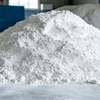
Product Focus: Low Melting Glass Powder (GT / FD / FR / D Series) | Industries: High-Temperature Coatings, Electronic Packaging, Flame Retardancy, Electronic Ceramics | Key Benefit: Tunable melting point 330–1200°C + chemical inertness + heavy-metal-free.
One Material, Four Industries, Countless Possibilities
In advanced inorganic materials, few products match the versatility of low melting glass powder. It functions as a high-temperature film-forming carrier, inorganic adhesive, synergistic flame retardant, and precision sealing material — all depending on how its melting behavior is engineered. This single material spans electronic ceramics, fire-resistant coatings, LED packaging, and aerospace composites.
Anywhere New Material (Guangzhou) Co., Ltd. offers a comprehensive low melting glass powder family across GT, FD, FR, and D series — each tailored to specific performance requirements. The core innovation: precise control over initial melting temperature, adjustable from 330°C to 1200°C, while maintaining excellent chemical inertness and predictable phase transition behavior.
This is not just a filler. It is an engineered functional material that actively shapes final product performance — forming films at targeted temperatures, bonding dissimilar materials, generating protective glassy char layers, and providing hermetic sealing.

What Makes Low Melting Glass Powder Unique
1. Adjustable Melting Behavior
The defining feature of low melting glass frit is its tunable melting profile. Unlike conventional glass with a fixed high melting point, this material can be engineered to soften and flow anywhere between 330°C and 1200°C. This is achieved through precise control of glass composition — adjusting ratios of network formers, modifiers, and intermediates to shift the glass transition and softening points to the desired range.
This tunability has profound practical implications. A coating needing a protective glass film at 450°C uses a different grade than an electronic sealant flowing at 600°C, or a flame-retardant system forming char at 800°C. One material platform, infinitely adjustable performance.
2. Sharp Solid-Liquid Phase Transition
Beyond the melting point itself, the material exhibits sensitive solid-liquid phase transition behavior — the transition from solid to liquid (and back) is sharp and predictable. This is critical for applications where the material must flow, wet a surface, and solidify into a coherent glassy phase within a specific temperature window. Gradual transitions would cause incomplete film formation, voids, or inconsistent bonding.
3. Chemical Inertness
Once the glass phase forms, it is chemically inert — resistant to acids, alkalis, oxidation/reduction, and salt spray. This makes it ideal for protective coatings and encapsulants that must survive harsh chemical environments over long service lifetimes. The inertness is structural, not coating-based; it does not degrade, deplete, or require reapplication.
| Series | Primary Function | Melting Range | Key Applications | Distinguishing Features |
| GT | High-temperature coating carrier | 463–1125°C | Refractory coatings, high-temp inks, special paints | Film-forming at elevated temps; heavy-metal-free (except GT40) |
| FD | Inorganic packaging adhesive | 330–600°C | Electronic packaging, hermetic sealing, die attach | Low-temperature flow; excellent dielectric properties |
| FR | Synergistic flame retardant | 700–1000°C | Flame-retardant coatings, cable compounds, composites | Forms protective glassy char; phosphorus-free option |
| D | Low temperature glass powder | 330–500°C | Low-temp sealing, glass-to-metal seals, specialty bonding | Ultra-low melting point; gradient melting design |
GT Series: High-Temperature Coating Carrier
The GT series is our flagship — an inorganic resin carrier serving as the high-temperature film-forming material for refractory coatings, high-temperature inks, and special industrial coatings. When heated to the glass powder's softening temperature, particles flow together to form a continuous, dense glassy film that protects the substrate from oxidation, thermal degradation, and chemical attack.
Parameters for reference only. Consult our engineers for specific application recommendations. GT40 contains lead for permitted applications.
Key advantages include gradient melting temperature design — different particles within the same coating soften at different temperatures, creating progressive film-forming behavior that prevents cracking and ensures complete coverage. Available in transparent and milky-white phases for color flexibility.
FR Series: The Phosphorus-Free Flame Retardant Revolution
Traditional flame retardants rely on halogenated compounds or phosphorus-based additives — both facing growing regulatory scrutiny and environmental concerns. The FR series low melting glass powder offers a fundamentally different approach: intumescent glass char formation.
When exposed to fire, the glass powder softens and flows to form a continuous, dense glassy ceramic barrier layer on the material surface. This barrier physically blocks heat transfer, prevents oxygen from reaching the substrate, and suppresses release of volatile combustible gases. The result: flame retardancy through a purely inorganic, non-toxic mechanism — no halogens, no phosphorus, no toxic smoke.

Particularly valuable in:
Cable insulation — where halogen-free, low-smoke requirements are mandated
Building materials — where fire ratings must meet environmental safety standards
Electronic housings — where flame retardancy coexists with electrical insulation
Aerospace composites — where weight, fire performance, and toxicity are all critical
FD Series: Electronic Packaging and Hermetic Sealing
In electronics, demand for reliable low-temperature hermetic sealing is growing rapidly — driven by power electronics, LED devices, sensors, and MEMS components. The FD series provides an inorganic packaging adhesive that flows at temperatures as low as 330°C, enabling glass-to-glass, glass-to-metal, and glass-to-ceramic bonding without exposing sensitive components to excessive heat.
Once sealed, the glass bond provides:
Hermeticity — moisture and gas barrier superior to any organic adhesive
Thermal stability — survives temperatures far above its formation temperature
Electrical insulation — excellent dielectric properties across wide frequency ranges
Chemical inertness — resistance to acids, alkalis, and solvents
Thermal cycling resistance — CTE can be matched to the substrate

Applications Where Low Melting Glass Powder Is Indispensable
1. High-Temperature Protective Coatings
For exhaust systems, furnace interiors, boiler tubes, and aerospace engine components, conventional organic coatings decompose at operating temperatures. Low melting glass powder (GT series) serves as the inorganic film-forming resin that creates a permanent glassy protective layer withstand temperatures up to 1100°C or more. Unlike organic coatings, the glass film does not burn, char, or degrade — it simply reforms if damaged, provided temperature is sufficient to re-melt.
2. Electronic Ceramics and Dielectric Layers
In multilayer ceramic capacitors, thick-film circuits, and dielectric layers, the powder acts as a low-temperature co-firing aid that enables sintering at reduced temperatures — preserving delicate metal electrodes and reducing energy costs. The ability to precisely tune the melting point to the cofiring schedule makes this possible.
3. Flame-Retardant Coatings and Compounds
The FR series replaces conventional halogenated and phosphorus-based flame retardants with an inorganic, smoke-suppressing, char-forming mechanism. In intumescent coatings, it can be combined with other functional fillers to create multi-layered protective systems meeting the most demanding fire safety standards (UL94 V-0, ASTM E84, EN 45545).
4. LED and Semiconductor Packaging
For high-power LEDs and semiconductor devices, the FD series provides hermetic glass sealing impervious to moisture — the single most common cause of premature LED failure. The low sealing temperature (330–500°C) is compatible with most device architectures, and the resulting glass seal delivers optical clarity and thermal stability no organic epoxy can match.
The Future Is Inorganic
As industries worldwide move away from halogenated compounds, phosphorus-based additives, and volatile organic materials, demand for inorganic functional powders that deliver performance without environmental compromise is accelerating. Low melting glass powder sits at the intersection of this trend — high-performance, environmentally responsible, and economically competitive.
Whether your challenge is protecting a substrate at 1000°C, sealing a semiconductor hermetically at 350°C, or achieving flame retardancy without toxic smoke, there is a grade in the Anywhere Powder low melting glass powder family designed for your application.


