
Thermal management is now a frontline design requirement for energy storage cabinets and EV charging stations. Battery thermal runaway, accelerated cell degradation, and charging speed limits are all sensitive to internal operating temperature, and many buyers now require the coating itself to deliver a measurable thermal barrier — typically 8°C or more between the inside and outside surfaces.
Conventional fillers cannot meet this specification. Solid mineral fillers have relatively high thermal conductivity and add mass without insulating value. To hit an 8°C ΔT, you need a filler that is intrinsically a poor conductor of heat.

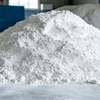
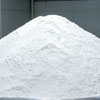
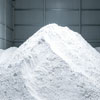
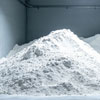
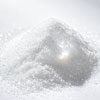
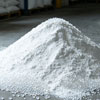
K30 hollow ceramic microsphere is built for exactly this job. Its true density is just 0.30 g/cm³ — the particle is essentially a sealed ceramic shell with an air-filled core, and air is one of the best thermal insulators available. The result is a very low thermal conductivity that translates directly into a meaningful temperature drop across the coating.
Key specifications that matter in production:
Average particle size: 40 μm
Sphericity: >99% — ensures smooth flow and uniform dispersion in the powder
Compressive strength: 23 MPa — survives powder coating extrusion and electrostatic spray without crushing
Softening temperature: >650°C — stable through the powder coating cure cycle
K30 is already moving through qualification with customers in the energy storage and EV charging segment, with the explicit 8°C ΔT target. Early positioning here is a real advantage, as this specification is becoming standard in tender documents.

A starting dosage of 10–20% by weight is recommended. Above that range, the low density of K30 can start to affect film flow and mechanical strength, so a stepped trial is the right approach. As a bonus, hollow ceramic microspheres also contribute some flame retardancy and a lightweight filling effect — useful when the application calls for both thermal insulation and weight reduction.


