
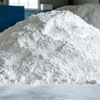
Low-melting-point glass powder delivers outstanding performance in high-temperature resistant coatings, ceramic-modified rubber & plastic, functional ceramics and electronic sealing. Its advantages of low-temperature melting, high-temperature inertness and dense film formation can only be fully realized via well-designed formulas with proper powder grades, dosages, matched resins and processes. This article introduces core formulation ideas for industrial users.

Core Classification: Latent Type vs Sintering Type
Latent type: Stays inert in resin systems at room temperature and functions only under high heat.
Sintering type: Melts into liquid glass during heating, fusing with substrates and inorganic fillers to form dense coatings.
Blending powders with different melting points and shapes creates a gradient melting ceramic system for complex requirements.
Matching Principle: Compatibility Between Powder and Resin
Mismatch is a common failure cause, such as gelation or dead glue in high-temperature inks.
Acid-base compatibility: Alkaline grades like GT55 should pair with alkaline resins to avoid adverse reactions.
Refractive index match: Consistent refractive index preserves light transmittance.
Particle size & dosage: Select particle size and loading based on practical demands rather than random addition.

Recommended Dosage for Typical Systems
| Application | Grade | Loading |
| Inorganic high-temp coatings/inks | GT series | 55–65% |
| Organic high-temp coatings | GT series | 30–45% |
| High-temp powder coatings | GT35 | 15–20% |
| Incinerator coatings (800–1000℃) | GT90+GT70 blend | GT90:40–60%; GT70:15–25% |
| Electronic low-temp sealing | D235/D245 | 20–100% |
| Flame-retardant rubber/silicone | FR series | 8–15% |
Dispersion & Processing Tips
Start low-speed mixing (200 rpm) with thixotropes and dispersants for full wetting. Raise speed to 800–900 rpm after wetting. Improper shear may trigger powder encapsulation or premature resin curing.


