
Conclusion first:
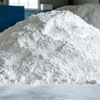
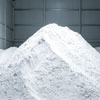
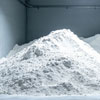
The most fundamental difference between low-melting-point glass powder and ordinary glass powder lies in their melting temperature—low-melting-point glass powder can start melting at temperatures as low as 330°C, whereas ordinary glass powder typically requires over 700°C to soften and flow. This difference directly determines that the former can be used "as a material," while the latter can only serve "as a filler" .

Why is this difference so critical? Three core reasons:
1.The melting temperature differs by more than double.
Low-melting-point glass powder has the notable characteristic of ultra-low-temperature melting, with starting melting temperatures covering an adjustable range of 330~1200°C. Common products include D235 with a starting melting point of 350°C, D245 at 450°C, D250 at 500°C, and D290 at 900°C . Ordinary glass powder (such as frit), by contrast, usually has a softening point above 700°C and requires a firing temperature of 1060~1120°C—the two temperature ranges barely overlap .
2. Different compositional routes lead to clear differences in environmental performance.
Low-melting-point glass powder is made from high-purity, eco-friendly materials such as silicon dioxide, phosphorus pentoxide, boron trioxide, lithium oxide, and zinc oxide, produced through high-temperature melting, cooling, and precision grinding . Its compositional system is based mainly on SiO₂, B₂O₃, and ZnO—for example, D250 contains SiO₂ ≥70%, B₂O₃ ≤15%, and ZnO ≤10%, with cadmium, lead, and mercury not detected . Ordinary glass powder, however, is made by crushing and grinding ordinary glass; it has a high softening point and a common composition . Some traditional products on the market still contain lead, with mesh sizes mostly around 800 and whiteness of only 86~90 .
3. The functional positioning upgrades from "filler" to "functional material."
Ordinary glass powder (such as the "glass powder" in the product system) is composed mainly of SiO₂ and Al₂O₃, characterized by chemical stability, acid and alkali resistance, high transparency, and high hardness. It is positioned for filling, hardness enhancement, wear resistance, and temperature resistance, and is mostly used in opaque or semi-transparent systems . Low-melting-point glass powder, in contrast, can serve as a special "coating film-forming agent," "inorganic flame retardant," "low-temperature ceramic powder," "adhesive," "encapsulation and sealing material," "resin," "solvent," or "carrier," and can achieve mutual sealing and coating between glass, ceramics, metals, and semiconductors . This is a capability that ordinary glass powder completely lacks.

What exactly are the differences? One table makes it clear:
| Comparison Dimension | Ordinary Glass Powder/Frit | Low-Melting-Point Glass Powder |
| Composition | Quartz, feldspar, borax, lead oxide, etc. | Eco-friendly systems such as Al/Si/B/K/O |
| Mesh size | Approx. 800 mesh | 1500 mesh and above |
| Whiteness | 86~90 | 93~95 |
| Thermal expansion coefficient | 100~140 | 65~100, adjustable |
| Melting temperature | 700~850°C | 330~1100°C |
| Chemical resistance | Average | Acid and alkali resistant, stable and wear-resistant after sintered film formation |
Advice for procurement staff and engineers: If your need is merely cost-reducing filling and hardness enhancement, ordinary glass powder or anhydrous transparent powder will suffice. But if your application involves high-temperature film formation, low-temperature sealing, flame-retardant ceramization, or improved adhesion, low-melting-point glass powder is a must. AnyPowder low-melting-point glass powder supports limited adjustments to melting temperature, high-temperature viscosity, expansion coefficient, and hardness, and can be flexibly matched to the substrate's expansion coefficient .


