


Ask a formulator what makes a heat-resistant coating work and most will talk about the resin — silicone, silicone-polyester, epoxy-phenolic. But resins have a ceiling. Above roughly 400–500°C, every organic binder in the formula begins to decompose. What remains, and what ultimately protects the substrate, is the inorganic filler system.
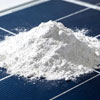
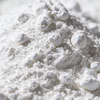
That is where glass frit becomes critical. A properly selected low-melting glass powder does what no resin can: it softens, flows, and fuses into a continuous ceramic-like film at exactly the moment the organic binder is failing. If the glass powder is wrong, the coating peels, cracks, or chalks — regardless of how good the resin is.
This guide walks through the five criteria that determine whether a glass frit will work in your high-temperature coating.
1. Melting Range — Match It to the Service Temperature
The single most common cause of coating failure is a melting range that does not overlap with the actual service temperature.
Glass frit does not have one melting point; it has a softening range. Three parameters define that range, and together they determine how the frit will behave in service.
The first is the softening point — the temperature at which the frit begins to flow, and therefore the point at which bonding with the pigment and the substrate starts. The second is the full melting temperature, where the frit becomes a continuous liquid, producing complete encapsulation and full densification of the film. Between these two lies the working range: the window in which the coating remains stable during service. A wide working range is more forgiving in production, while a narrow one demands tighter process control.

The rule of thumb: the frit's full melting temperature should sit at or slightly below the coating's peak service temperature — not far below, and never above it.
If the frit melts | You get… |
Far below service temperature | Over-sintering, sagging, loss of film thickness, substrate attack |
Roughly at service temperatur | Ideal — in-service ceramic fusio |
Above service temperature | Insufficient fusion, porous film, chalking and early peeling |
This is also why a single frit rarely solves a mixed duty cycle. For coatings that see both a low-temperature bake and a high-temperature service stage, a graded multi-frit system (a low-melting fraction plus a high-melting fraction) delivers more consistent protection than any single powder.
2. Coefficient of Thermal Expansion (CTE) — The Silent Killer
Even a perfectly fused coating will fail if it expands differently from the substrate it protects.
When a coated part heats and cools, the coating and the metal move at different rates. The mismatch generates interfacial shear stress. Above a critical level, the film cracks, blisters, or delaminates — usually on cooling, when the stress reverses.
Typical CTE values of common substrates:
Substrate | CTE (× 10⁻⁶ / K) |
Carbon stee | 11–13 |
Stainless steel (304) | 16–18 |
Aluminiu | 22–24 |
Glass / enamel | 8–9 |
Ceramic (alumina) | 7–8 |
A glass frit's CTE should be within roughly 10–20% of the substrate's. Where that is not achievable with a single powder, two routes work:
Blend frits with complementary CTE values to reach an intermediate figure
Add a low-expansion filler (such as fused silica or mica) to pull the composite CTE down
Do not skip this step. A CTE mismatch is invisible in a lab sample and obvious in the field after three thermal cycles.
3. Particle Size Distribution — Not Simply "Finer Is Better"
Particle size controls three things at once: dispersion quality, sintering behaviour, and film surface quality.
D50 range | Behaviou | Best for |
| Too coarse (> 30 µm) | Incomplete sintering, rough surface, visible particle | High-build / thick-film primers |
Balanced (5–20 µm | Good packing, even fusion, smooth film | Most high-temperature coating |
Very fine (< 3 µm) | High oil absorption, viscosity rise, sagging, hard to dispers | Thin, high-gloss topcoats only |
A graded distribution — coarse, medium and fine particles together — usually outperforms a narrow distribution of the same median size. The smaller particles fill the gaps between the larger ones, raising packing density. The result is a denser green film, better fusion during baking, and fewer pinholes through which oxygen can reach the substrate.
One practical note: finer powders raise oil absorption, which in turn raises binder demand and formulation cost. Optimising for "as fine as possible" frequently increases total cost per square metre while degrading film quality.
4. Chemical System — Choose by Environment, Not by Habit
Glass frits for coatings fall into three families. They are not interchangeable.
System | Strengths | Limitations | Typical Use |
Borosilicate | Excellent chemical durability, wide availability, thermal-shock resistant | Lower water resistance in some grades | General-purpose high-temperature coatings |
Phosphate | Bonds well to metals, low melting range | Lower acid resistance, can be hygroscopic | Metal primers, electrical steel coatings |
High-silica | Highest temperature capability, very low CTE | Requires higher firing temperature | Refractory and kiln-adjacent applications |
Select by what the coating will actually face: acid or alkali exposure, salt spray, thermal cycling, or a moist environment. A frit that wins on temperature resistance can still fail in six months if the service environment is chemically aggressive.
5. Compatibility with the Binder — The Handover Problem
The transition from organic binder to inorganic film is the most demanding moment in a high-temperature coating's life. It has to be designed, not left to chance.
Three questions to settle before specification:
1、Does the frit soften before the binder has fully burned off? If yes, the film can trap decomposition gases and blister. The frit should begin flowing as the binder is on its way out — not before.
2、Is the frit surface-treated for your binder system? Silane-treated powders disperse markedly better in solvent-borne and silicone systems and reduce settling during storage.
3、What is the frit's oil absorption? A high value competes with pigment for binder and can push the formulation out of spec before the first property test.
Application Quick-Reference
Application | Peak Service Temp | Selection Focus |
Automotive exhaust coatings | 600–800°C | Silicone-compatible frit, matching CTE with stainless steel |
Stove, BBQ and fireplace coatings | 500–700°C | Low melting range, good adhesion to cold-rolled steel |
Electrical heating element coatings | 700–900°C | Phosphate system, dielectric strength |
High-temperature signage and nameplates | 500–750°C | Fine particle size, colour stability, gloss retention |
Refractory binders and kiln coatings | Refractory binders and kiln coatings |
Three Selection Mistakes Worth Avoiding
Mistake 1 — Specifying by melting point instead of by service window.A single number hides the soft range that actually determines performance.
Mistake 2 — Assuming the finest powder performs best.Finer powder increases oil absorption, viscosity and cost. Graded distributions beat narrow ones.
Mistake 3 — Copying a competitor's formulation.Frit systems are tuned to a specific substrate, film thickness and firing profile. A formula that works on stainless steel will often crack on aluminium.
Where Anywhere Powder Fits
Anywhere Powder manufactures low-melting glass powders with full melting temperatures from approximately 330°C to 1350°C, covering the great majority of high-temperature coating applications in a single supplier. The GT series borosilicate and high-silica frits are available in multiple particle-size grades and can be supplied as blended systems where the service window spans a wide range.
Full technical datasheets, CTE values and particle size distributions are available on request, together with recommended starting formulations.
Working on a high-temperature coating project? Request a technical datasheet and a free 500 g sample to run a bake test against your own substrate and firing profile.


